- Before using the Craft Raft, operators should ensure wind and sea state conditions are suitable for towing, especially without PWC loaded.
- It is not recommended to tow the Craft Raft without PWC if the combined wind speed (environmental wind speed + vessel speed) is above 30 knots or wind speed exceeds 15 knots.
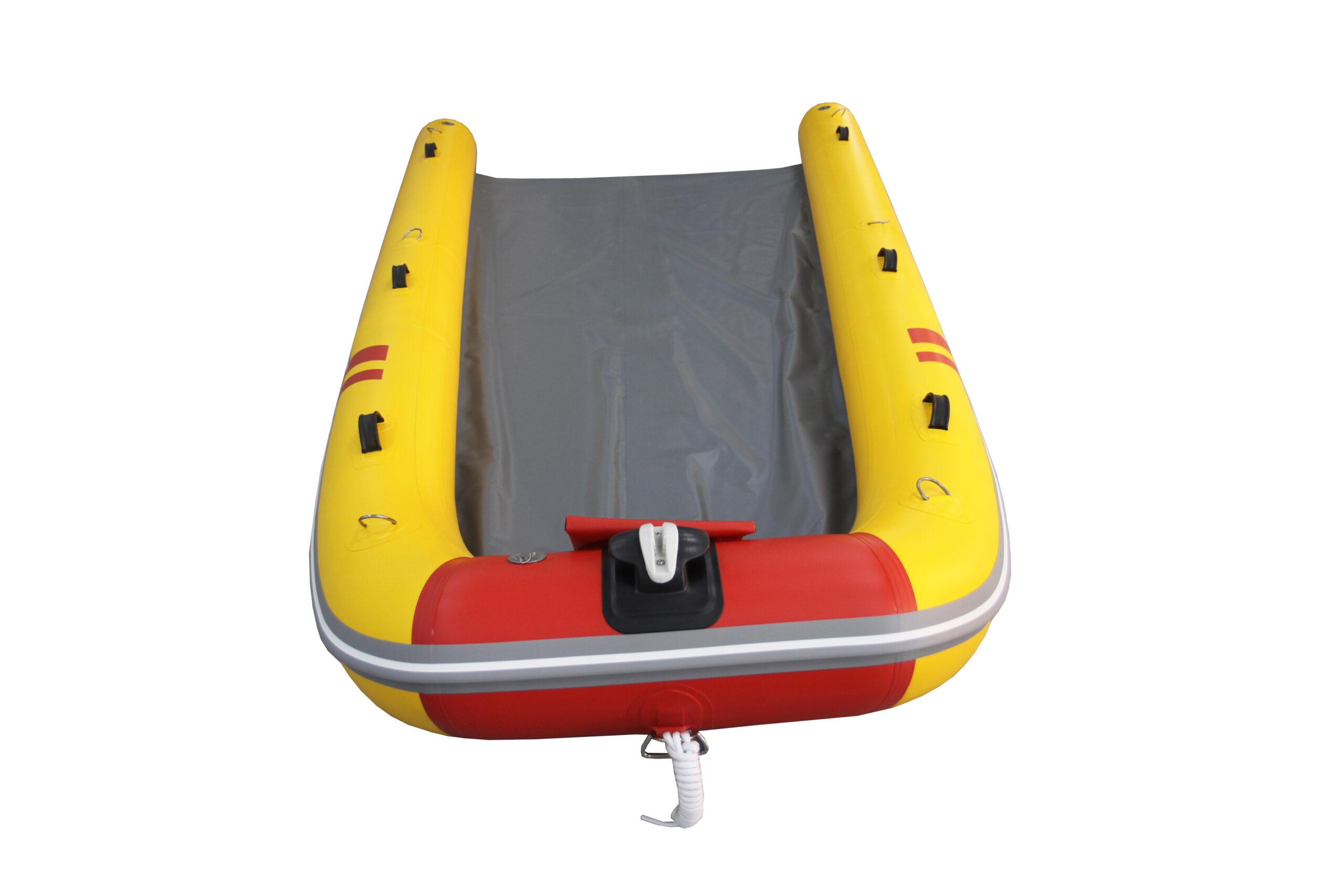
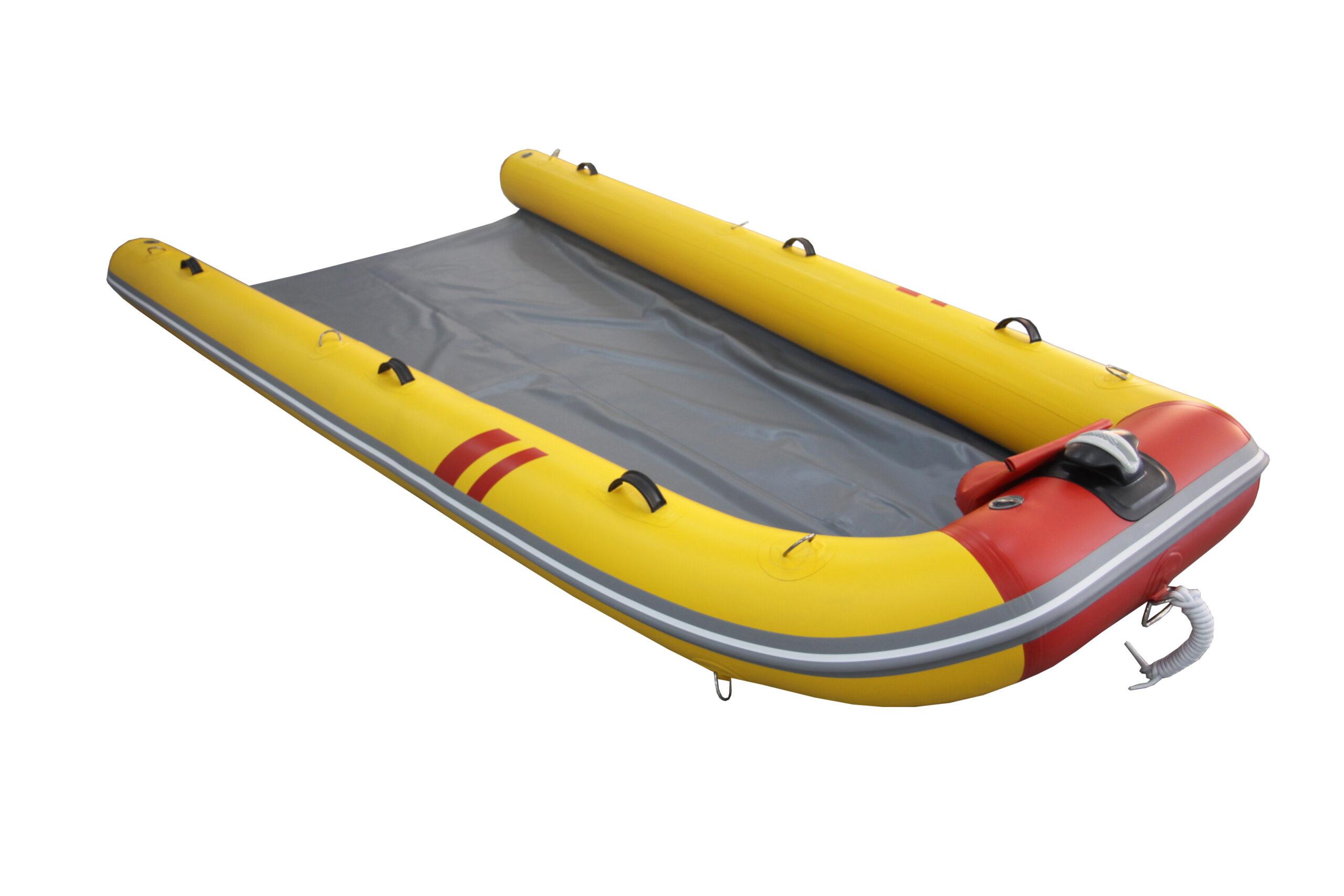
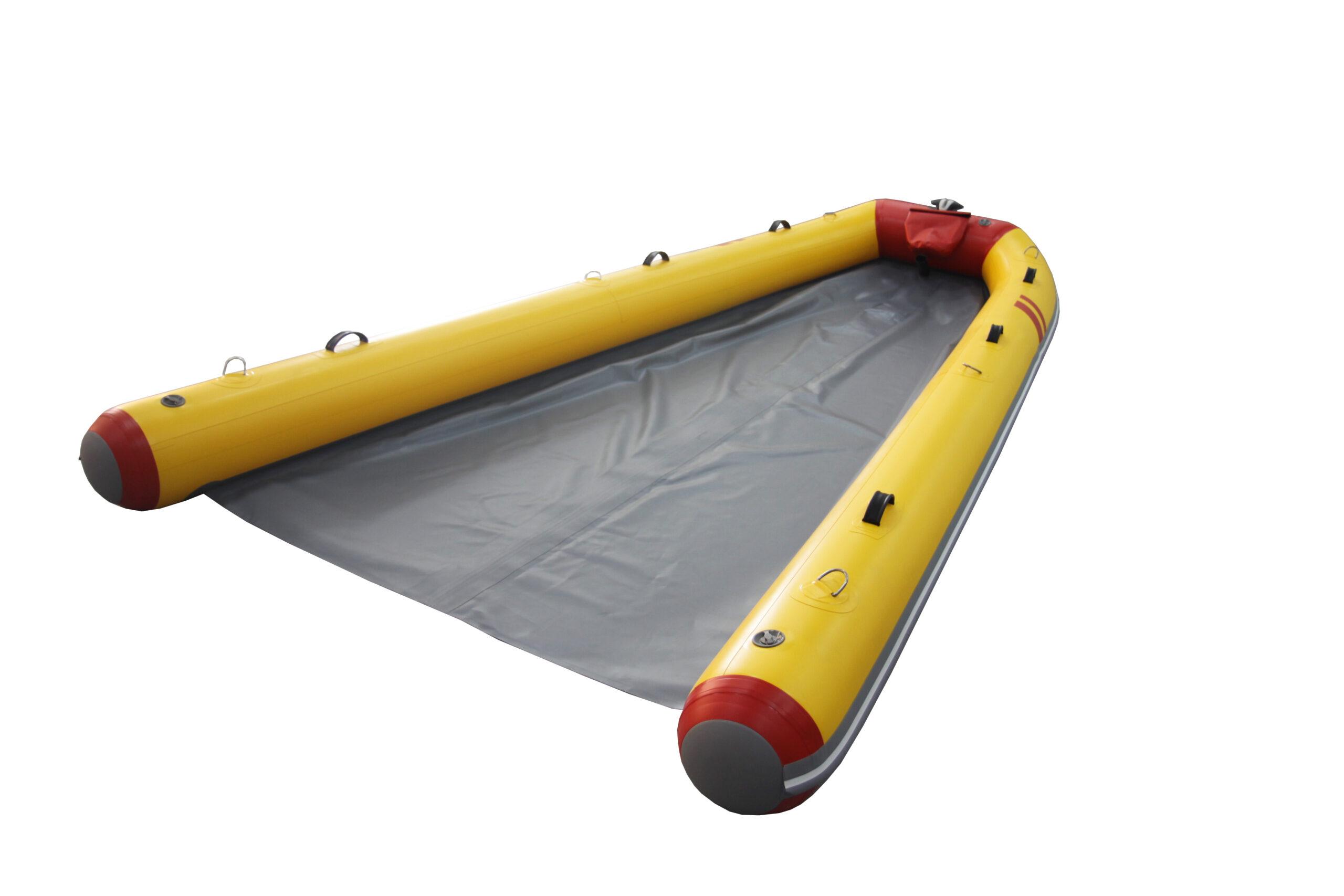
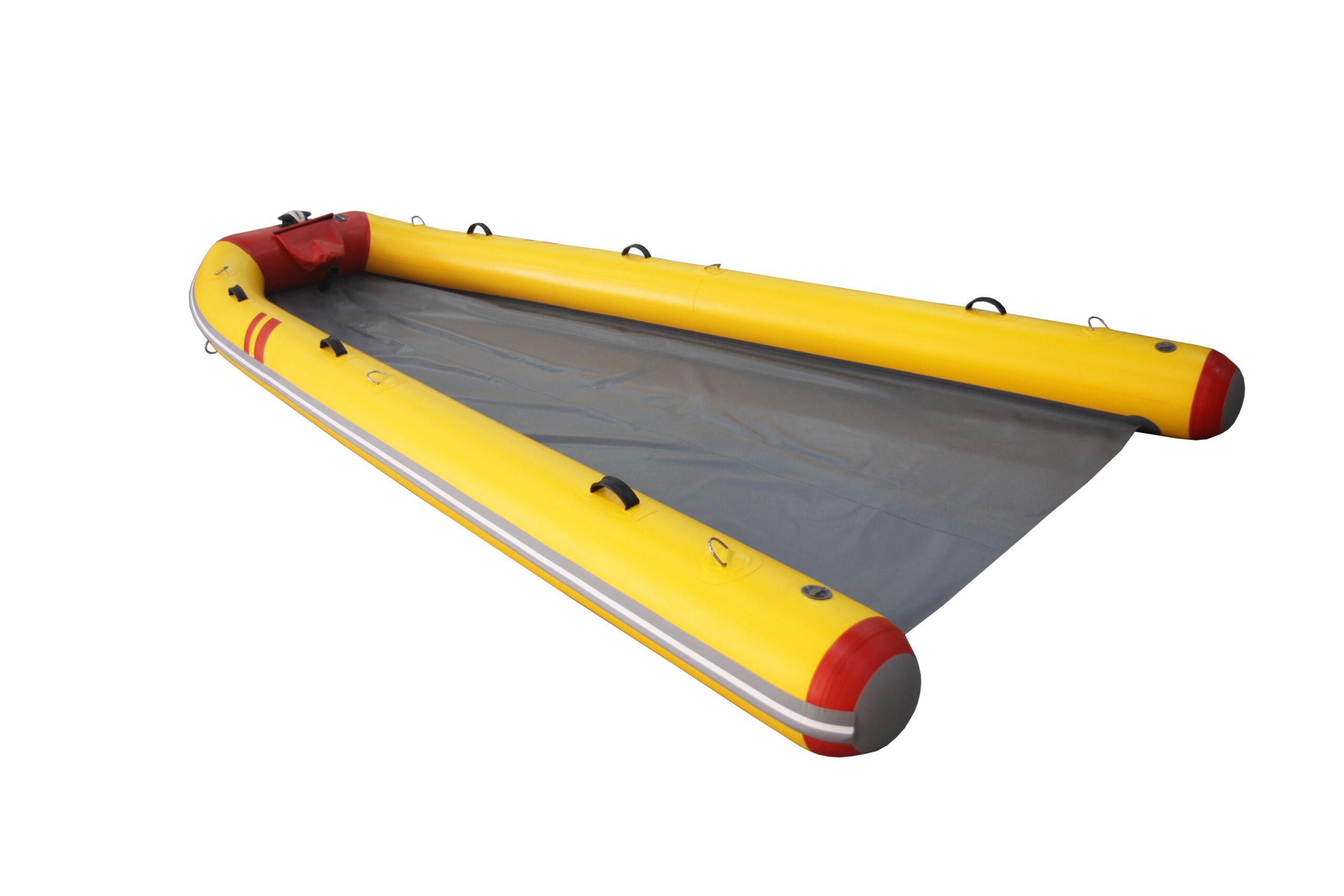
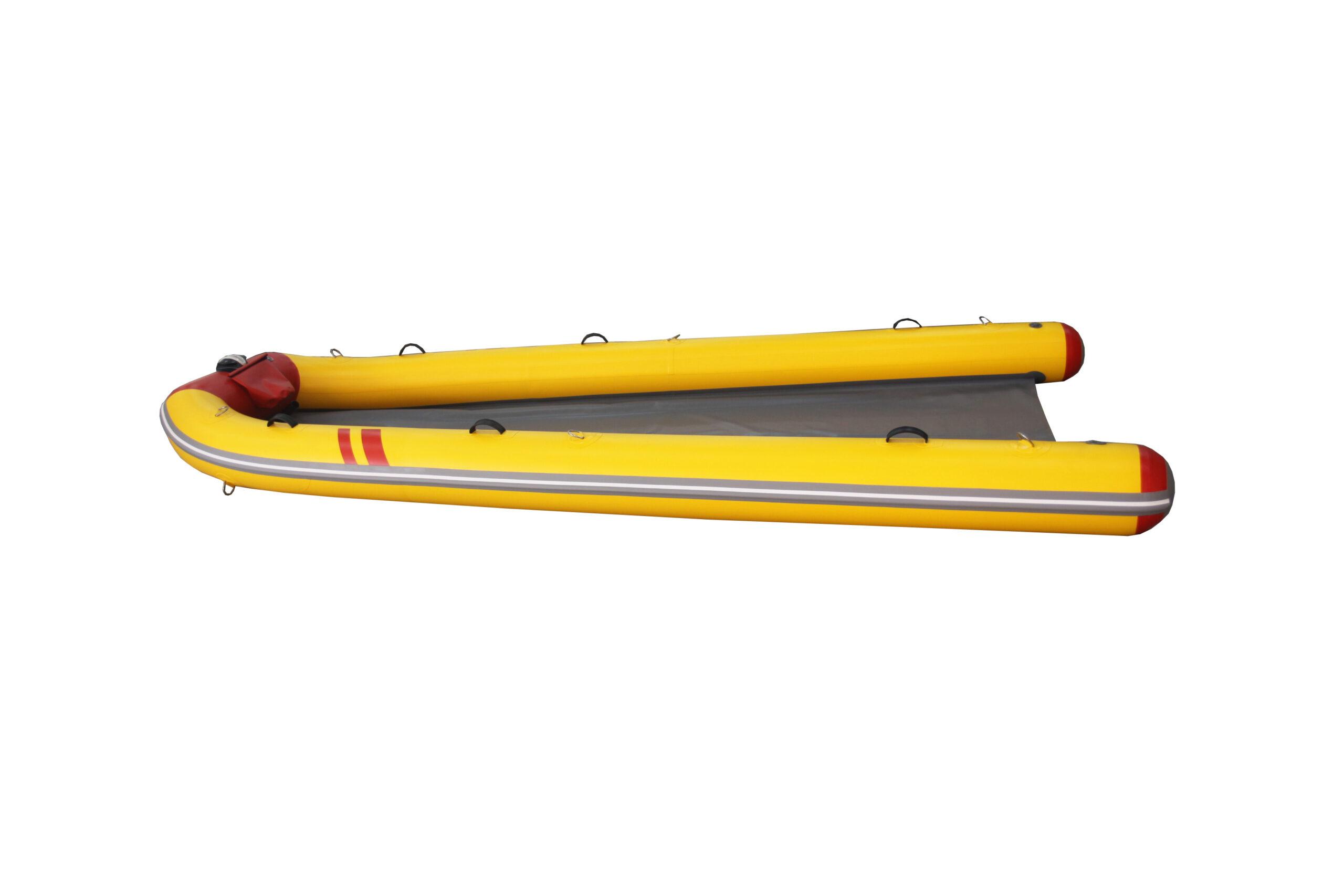
- Open carry bag and unfold Craft Raft on a flat surface being careful of any sharp or other objects that may damage the fabric. Do not drag the craft raft across the ground as this may damage the fabric or welded seams
- Alternatively, it can be placed directly in the water as the Craft Raft will float without inflation, ensuring it is secured to the towing vessel.
- Inflate the Craft Raft using the supplied foot pump ensuring all valves are closed prior to connecting the inflation hose. All 3 valves (1 per air chamber) must be used. Start by inflating each air chamber to 80% inflation, then again to 100%.
- A low-pressure electric pump can also be used however, do not inflate the air tubes beyond 80% with an electric air pump. The tubes should be relatively firm to the touch (Do not over inflate the tubes as this can cause damage to the welded seams). Once the Craft Raft is fully inflated, it can be towed with or without a PWC.
- Towing without a PWC:
- Attach the vessel tow rope to the towing eye end of the Craft Raft towing bridle.
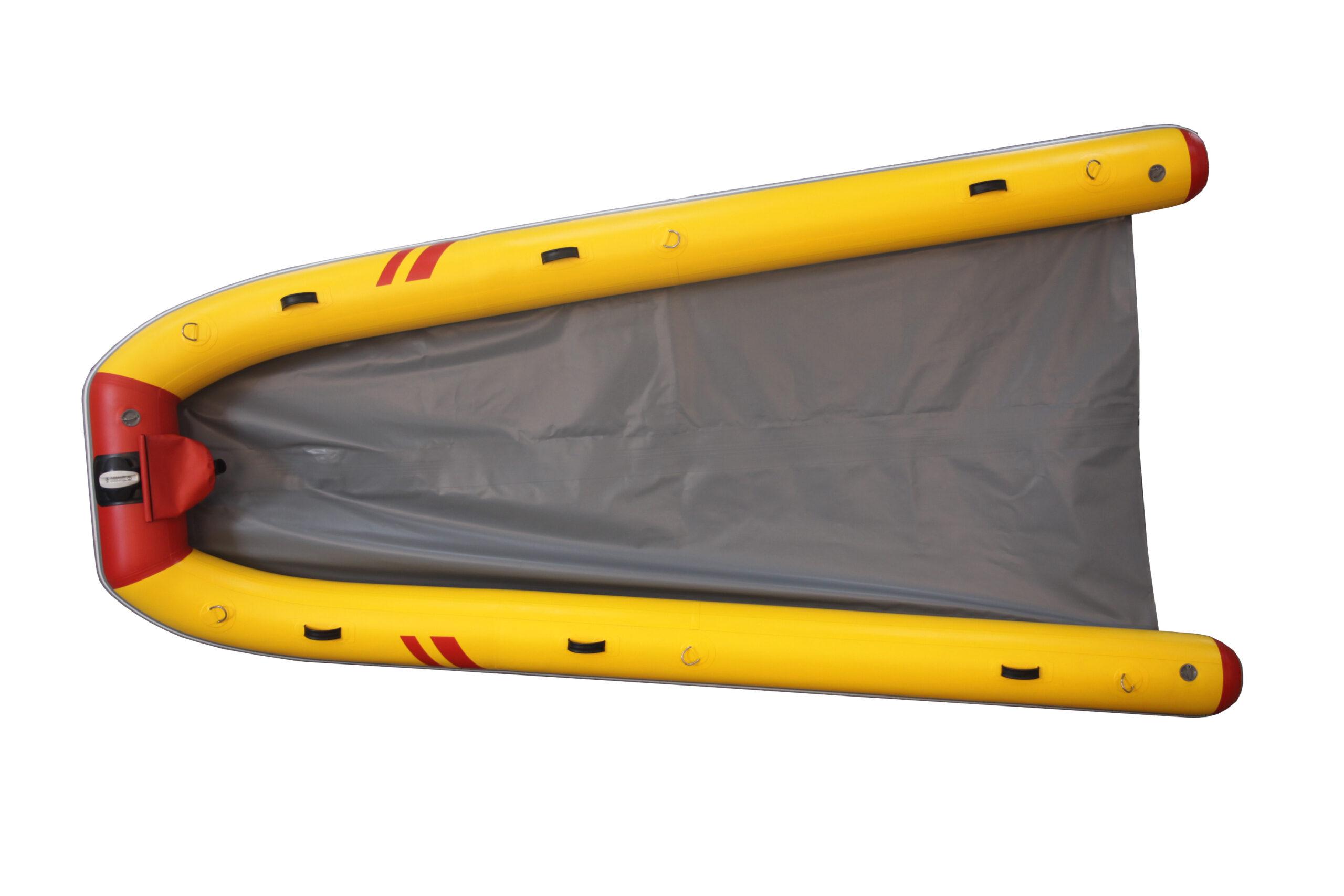
- Attach the spring hook end of the Craft Raft towing bridle to the bow D-Ring with handle on the underside of the bow, ensuring it passes through the rope guide of the bow cleat.
- The Craft Raft is now ready to be towed without PWC.
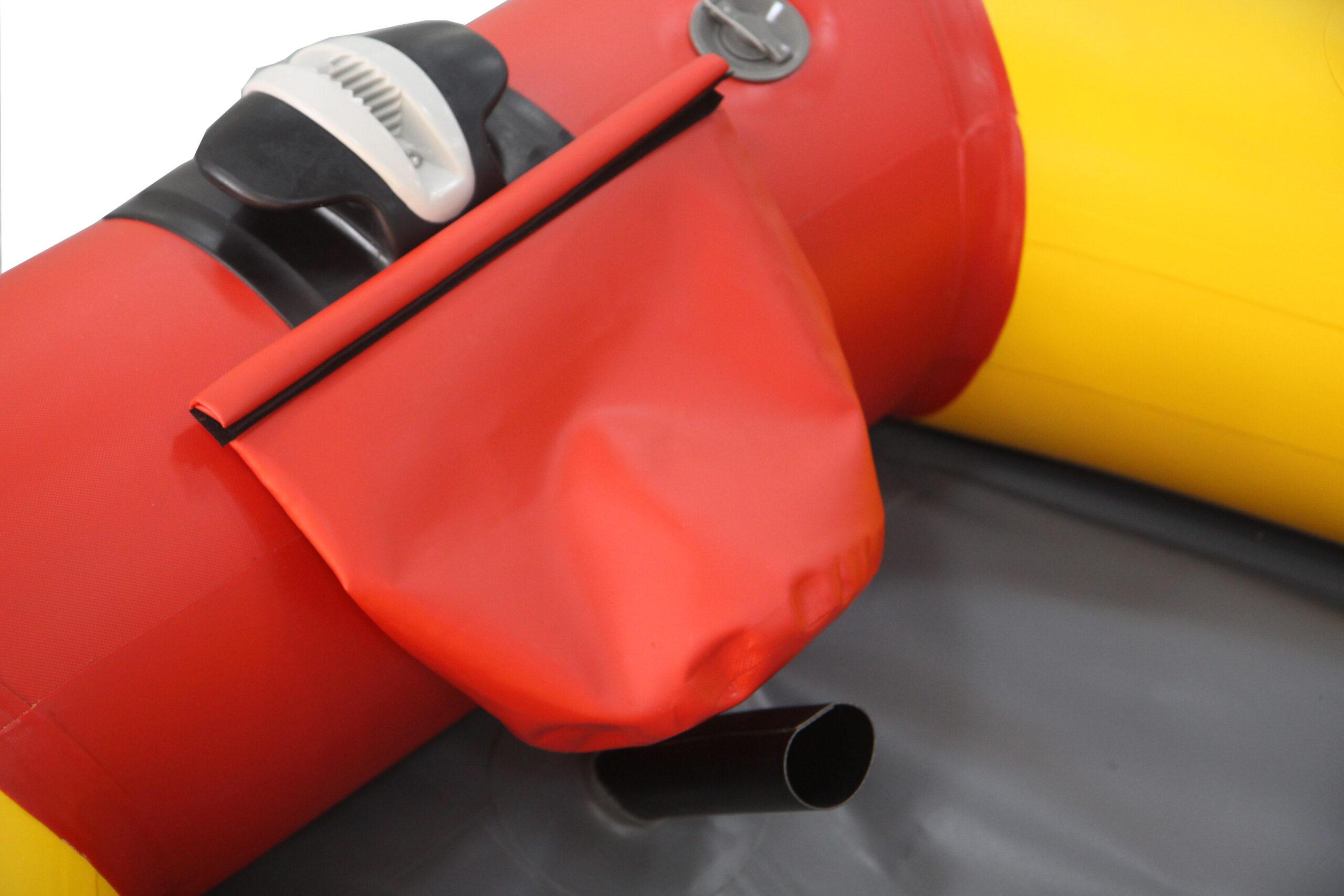
- Continually monitor the Craft Raft and adjust the tow as necessary. This could include changing speed, tow line length, or filling/ emptying the ballast water bag on the bow tube. Extra caution should be used in windy conditions.
- Vessel speed should not exceed 20 knots.
- Placing PWC into Craft Raft:
- Connect the spring hook to the towing eye on the bow of the PWC.
- Pull the PWC into the Craft Raft. Considerations to handling may need to be taken if the PWC has hull fixtures that could get caught on the Craft Raft mat floor.
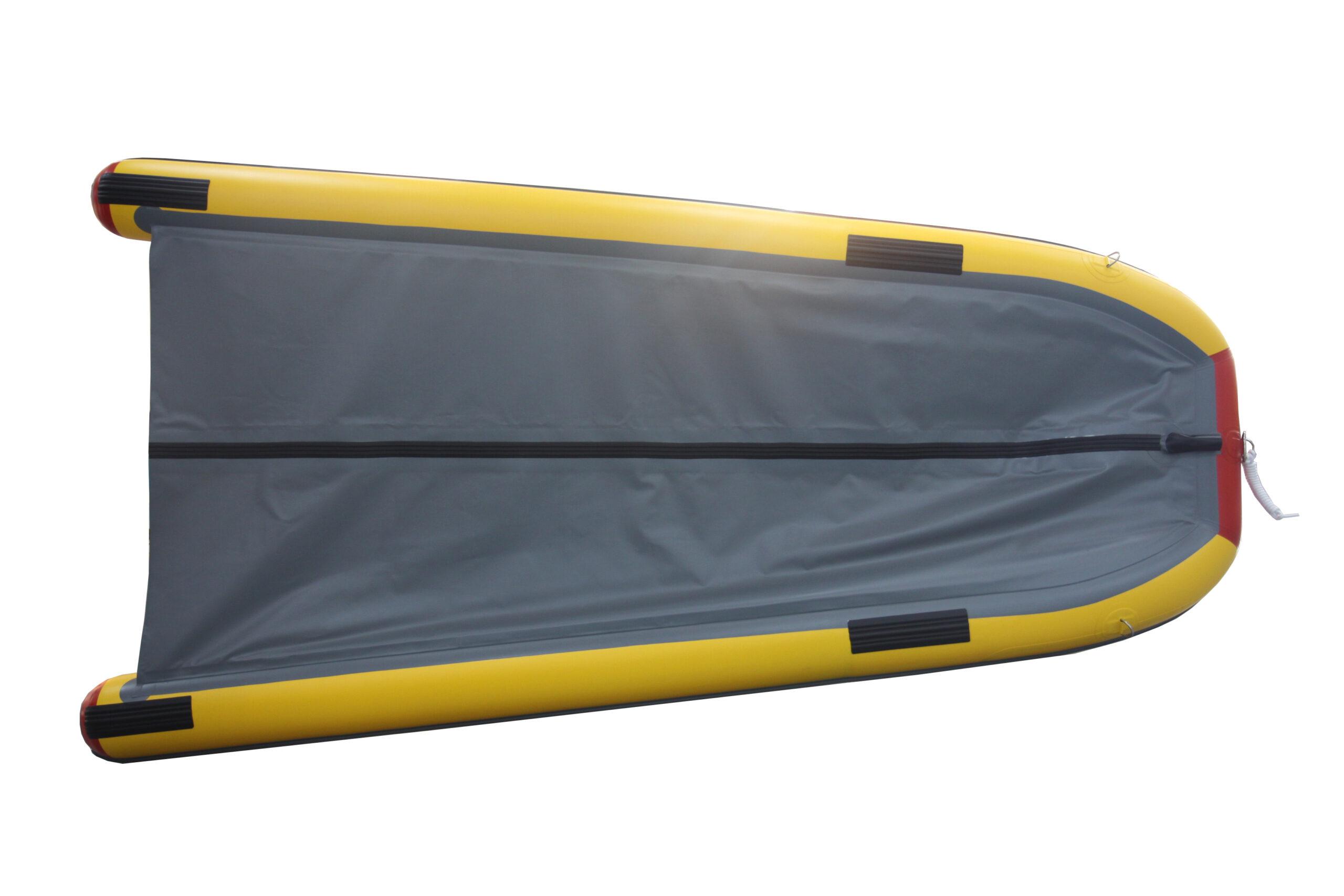
- The PWC needs to be pulled into the Craft Raft sufficient to ensure that the water pump intake is covered by the mat floor before towing. There is no requirement to pull the PWC all the way to the bow as it will be pulled further into the Craft Raft as towing commences.
- Towing with a PWC:
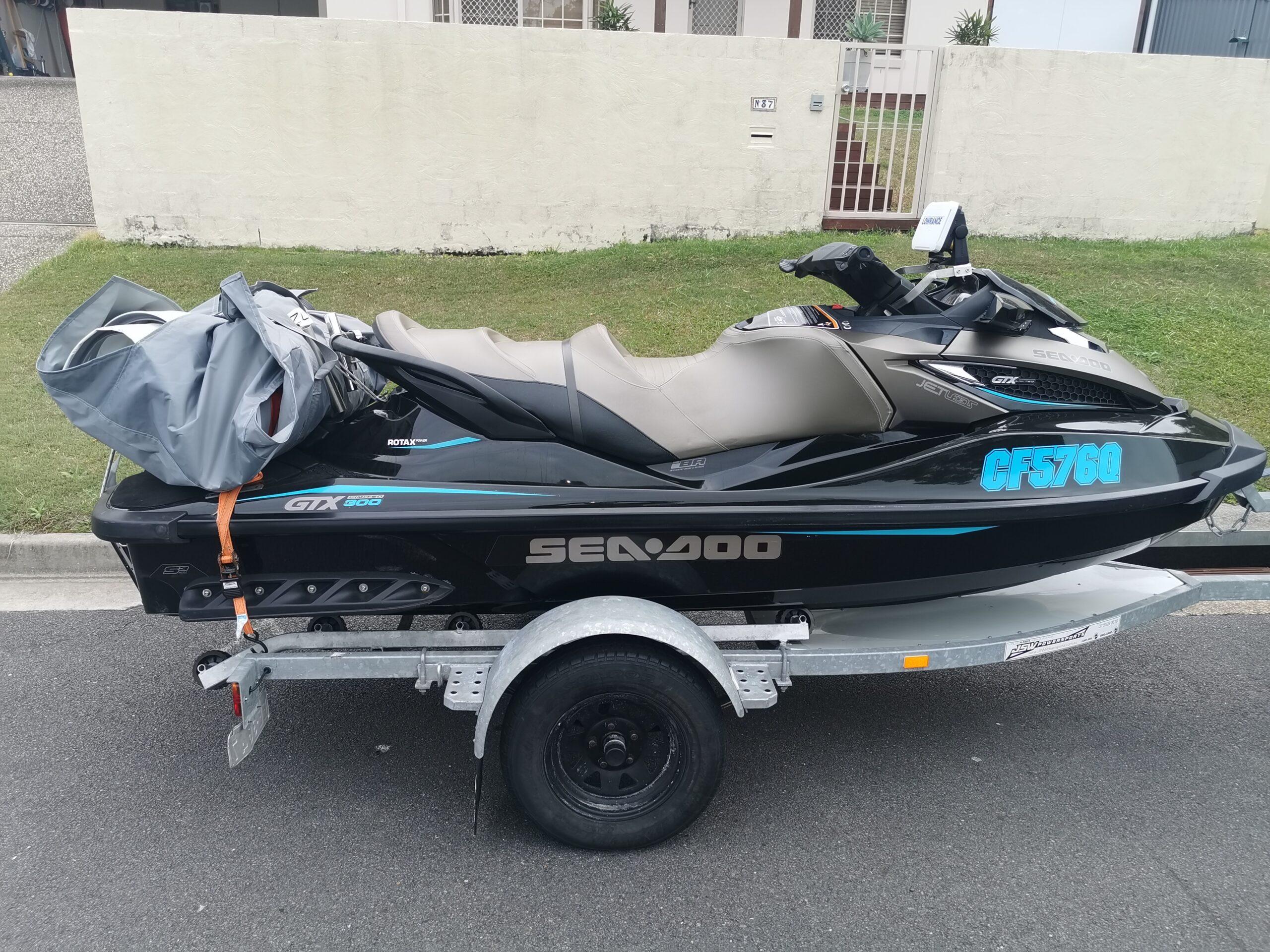
- The Craft Raft with a PWC loaded should be towed similarly as towing an inflatable boat of a similar size.
- Passengers can remain on the PWC whilst being towed at however, passenger comfort, safety and prevailing weather conditions should be taken into consideration.
- Vessel speed should not exceed 25 knots.
- Unloading the PWC in shallow water:
- In shallow water is the easiest method to unload the PWC.
- While allowing the towing rope to slacken and standing in a depth where the PWC is floating, simply push the tube of the Craft Raft forward while holding the PWC stationary. Alternatively, another person can prevent the Craft Raft moving while the PWC is unloaded.
- The tubes can be deflated as necessary to assist in unloading if the PWC is a tight fit.
- Unloading the PWC from a vessel or a pontoon (or similar),
- The PWC should be secured from its tow hook (typically below the rear seat) on the stern, to a stern bollard or davit the vessel.
- Secure a a line to the the forward D-ring of the Craft Raft (the bow cleat can also be used)
- Pull the Craft Raft forward, away from the PWC. (Pulling the PWC astern from the Craft Raft may be more difficult due to the weight of the PWC, however individual judgement should be used)
- The tubes can be deflated as necessary to assist in unloading if the PWC is a tight fit. https://youtu.be/bUEBMuUR1lU


<!– Google tag (gtag.js) –> <script async src=”https://www.googletagmanager.com/gtag/js?id=AW-17720028348″></script> <script> window.dataLayer = window.dataLayer || []; function gtag(){dataLayer.push(arguments);} gtag(‘js’, new Date()); gtag(‘config’, ‘AW-17720028348’); </script>